

Driving an agile corporate culture with change management
Many teams and sometimes entire companies are caught in the hamster wheel: Although everyone is kicking hard, things are not going well. The reasons for this can be varied. In this article we want to introduce you to a framework with which you can free yourself from the hamster wheel and use the potential of your employees to initiate a sustainable cultural change. This is how you create an agile corporate culture.


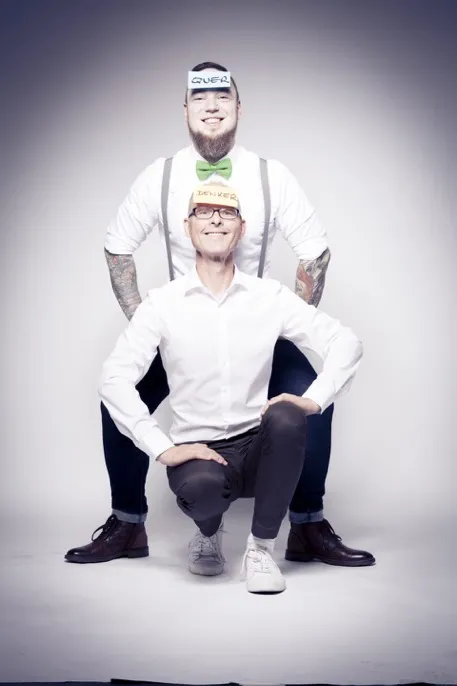
We are pleased to present this article to you in cooperation with our partner “Denkerprise® - the Thinker Enterprise”To be able to present. Just like us, Denkerprise has dedicated itself to the mission of creating agile corporate cultures through sustainable cultural change (keyword “agilization”) that are competitive in today’s VUKA world. Behind Denkerprise stand with Dr. Knut Menzel and Bert Rother BA are two experienced coaches who specialize in agility and change management.
What does systemic constructivist work in the context of a change mean?
personal responsibility
As part of a cultural change or change, this means working across hierarchies and across departments in order to maintain the maximum degree of cooperation and personal responsibility of all employees involved. This creates efficiency and, above all, synergy that optimally position the organization on the market in competition.
Systemic constructivist work in the context of a change is generally not advice. Rather, it is support for individuals or groups to derive a solution through self-reflection. Because only one is an expert in change: the customer himself. This is why this approach is often classified as “helping people to help themselves”.
At this point at the latest it becomes clear why this approach fits so well with Echometer. After all, Echometer does nothing else than that Support team self-reflection and structure. But methods such as design thinking, collaborative work, and SCRUM are based on exactly this “systemic” philosophy of initiative and self-reflection.
Iterative improvement through self-reflection
And this is also evident in the content of all of the methods: All of these forms of work are iterative. That means: space for optimization is used and continuously implemented. There is no right or wrong. Based on independent assessments of the teams, procedures are further optimized or rejected in the iterations and replaced by more targeted ones.
We would like to illustrate this somewhat abstract statement with an example:
One company, we call it Handels GmbH, finds that 3% of sales are lost annually, while the competition is growing steadily. Handels GmbH has to take action and make its way. To do this, a new IT infrastructure has to be introduced, work processes improved and new market segments opened up. For this purpose, the mood of the employees is determined using Echometer, possible approaches for improvement are developed with agile workshops and the change is initiated and implemented using change management formats.
The change management formats from Denkerprise as well as the functions of Echometer allow regular surveys and communication directions from management to the workforce (top down) as well as from the workforce to management (bottom up) to reflect the current status quo of cultural change towards an agile corporate culture determine. The procedure is the prerequisite for bringing the Handels GmbH company back on the growth path in the market.
So how do you pick up your organization and start sustainable cultural change?
Agile corporate culture: Start “agilization” of the transformation in 3 steps

Step 1: stimulate self-reflection
You cannot change what you are not aware of. In order to make a culture changeable, it must first be made perceivable. Many authors describe an (agile) corporate culture as “read-only” because it does not simply change these by defining new corporate values. In order to make a successful change, the difference in culture must be significant for every individual.
It is therefore important to encourage self-reflection and to offer everyone involved a change of perspective that allows a view from the outside in order to be able to compare company values with their own values.
Step 2: getting to know methods
Before rushing to question all existing framework conditions, it is important to provide employees with alternative working methods for agilizing the company.
At this point, in addition to online training, workshop formats with external moderation are also particularly suitable as examples. A “Design Thinking” workshop, for example, can lead to employees developing a completely new understanding of their own services. This alone can provide a clearer picture of which customer needs are behind the value creation steps and how they could be solved in a different way - the basis for innovation.
Such workshops are not only cross-hierarchical and interdisciplinary in your own organization as part of a change, but can also be carried out with customers and partners to improve cooperation, optimize processes or find new market segments.
In addition to defining your own added value, it is also important how you create this added value internally. Methods such as Kanban, SCRUM, Design Thinking, collaborative work and creative agile work are particularly promising and tried and tested approaches. This is exactly the focus of Denkerprise.
Step 3: continuous self-reflection - “listening to the organization”
Once the dependency on framework conditions and organizational culture has been understood and the teams have been given fresh impulses about possible forms of work through workshops, the real cultural change can begin.
Important here: Let the cultural change happen and give your teams the freedom to experiment with new methods and gain experience. What really needs to be maintained on an ongoing basis is continuous team reflection. Only if there is a framework for regular self-reflection will the cultural change remain sustainable and be driven forward by the teams.
As soon as self-reflection no longer takes place, teams are in danger of falling back into old patterns and maintaining existing ways of working, even if the framework conditions change - you are trapped in the hamster wheel again. You know this, then it says: “The changes have fizzled out again…”.
That’s why we have one with Echometer Feedback tool created that provides teams with a structured framework for continuous feedback. It works very simply: team members regularly give feedback that they share in their Team retrospectives Discuss and analyze (team meetings for self-reflection). Based on the feedback, they independently derive measures there, which then flow back into the feedback cycle. The effect of the measures will be discussed continuously in the next team retros:

Agile corporate culture: start with a free consultation
Would you like to find out whether and how the concept can be used in your company? Then let me know here for a free 15-minute consultation right now.
In the conversation we work out:
- Where your current cultural change challenges lie
- Which approaches are promising in your case
- In what form Echometer & Denkerprise can help your company.
If that sounds exciting, reserve an appointment here now. We look forward to getting to know you personally!
About Us
Echometer, a spin-off from the University of Münster, and thinkers pinch have set themselves the task of supporting companies in the field of agile working methods and change management. Denkerprise introduces agile working methods and Echometer supports companies with its online tool in converting classic personnel and cultural development tools such as employee surveys and meta-communicative team discussions into an agile change management tool. Together, an agile corporate culture can be developed.


