

Experience report - remote agile coaching with Holger
Experience report - The format
How is Echometer actually used in practice? And by whom? We want to answer these questions in a series of Echometer reviews, therefore we have interviewed some of our users.
Let’s get started with Holger Koschek’s Echometer experience report. Holger is an agile coach and uses Echometer among other things, in the case of his client Frontastic - a “Remote Native Company”.
The interviewee
Jean: Holger, we are pleased that you are part of this format! Please introduce yourself to our readers.
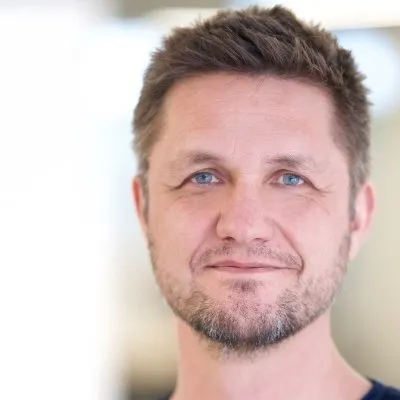
Holger: Hi! I am Holger Koschek. As a freelance consultant, trainer and coach, I work with people in various roles to advance their projects and organizations. Progress is my declared goal, because only those who advance can make a difference. My agile approach helps me find the suitable starting points for change. My solution is therefore never straightforwardly Agile, Scrum or Kanban.
I often support companies that want to rethink and revise their collaboration model in order to increase their value contribution for their customers. On this path, I met Thomas Gottheil. At the beginning of the year, Thomas asked me to support his new company Frontastic as an Agile Coach. Frontastic is a “remote-native company”: all colleagues work from home all over Europe. Under normal circumstances, however, they meet in person at least once a quarter to strengthen social bonds.
Experience with agile work
Jean: How long has agile work been important to you?
Holger: “Officially” since 2008 - that’s when I was appointed Certified Scrum Master. I had also worked interdisciplinary, focused and prioritized before that. For me, agile working means more than the targeted application of agile methods. It is a way of thinking and working that accepts dynamics as the norm and, through a good mix of structure, flexibility and discipline, ensures that I remain capable of acting in such dynamic situations.
Jean: And which teams do you work with exactly?
Holger: The teams with whom I have worked and are currently working could not be more different from each other: These range from corporation to startup, from management to processing, from software products to business models, from common project rooms to widely distributed in the home office, from agile beginners to old timers and from aircraft maintenance to publishers.
Despite all the differences, there are at least two main similarities: The teams value interdisciplinary work without exception. They are also used to reflecting on their ways of working in retrospectives and adapting them if necessary.
I am currently working for several customers with different intensities as an external agile coach at the same time.
Working remotely as an agile coach during Corona
Jean: What has Corona changed for your work as an agile coach?
Holger: Surprisingly, not much. My teams managed to switch their collaboration from “on-site” to “remote” very quickly. At Frontastic, it was not necessary to adapt the way of working at all, as the company, as I said, works in a “remote-native” way.
At the beginning I was skeptical whether I would be able to fulfill my role well even if I had no direct contact with people. The skepticism has now evaporated. Although I have never met some Frontastic colleagues personally, a trusting collaboration is possible. This is mainly due to the respectful interaction with each other, but also to the common goals.
Jean: How did you initially react to the new circumstances? What have you set out to do?
Holger: It quickly became clear to me that we needed to put even more care into collaboration. This is how a collection of principles and tips for online meetings was created at one of my clients. Since I can no longer see directly who is available for a spontaneous conversation, the electronic calendars and the status in the various communication tools must be well maintained. Instead of coordinating appointments in long e-mail threads, for example, it is more efficient to use the “Suggest new time” function of the electronic calendar. Not all team members were familiar with this function. When using tools such as Microsoft Teams or Zoom, there were reservations that I reduced through short training sessions.
Courage, personal responsibility and self-organization are particularly important under the given circumstances. To promote these qualities, each team member needs their own individual dose of support.
Jean: What are your insights based on past experience?
Holger: We humans are capable of more than we ever thought possible. On the other hand, our personal boundaries are now becoming more visible without mercy. So there is plenty to do for Agile Coaches …
Experience report
Echometer in distributed teams
Jean: We come to the Echometer experience report. How exactly does Echometer help you in remote collaboration with teams?
Holger: Echometer provides me with the common thread for the retrospective without pushing myself into the foreground as a tool. By preselecting open and closed questions, I can give the retrospective a thematic framework. In addition, all team members who took part in the survey are prepared for the retrospective. The organizational questions are a good medium and long-term mood barometer. And the measures jointly developed in the retrospective have finally found an online home.
Jean: What would be the challenges for remote retros without Echometer?
Holger: I would have to make sure that all team members prepare well for the retrospective. Spontaneously discussing and synchronizing the (interim) results online is sometimes difficult. If all participants are familiar with the questions beforehand, the discussions will be more targeted. This harbors the danger that essential topics that are not covered by the prepared questions will be left behind. I write down such topics with the help of the Echometer note function. Depending on the urgency of the topic, I open the space for discussion of this topic or take it with me as a candidate for the subsequent retrospective.
The extensive catalog of questions with its categories helps me to give the retrospective a thematic framework. This reduces the risk of ignoring essential aspects for teamwork.
Without Echometer, I would have to juggle several tools to moderate the discussion, record interim results, derive measures from them and follow them up.
Sequence of the retros with Echometer
Jean: How do the remote retros work with Echometer?
Holger: Structured. I like that because I am a structured person. I have the feeling that the teams also benefit from the clear framework that Echometer creates. Nevertheless, the teams can discuss openly and in all directions. As a moderator, I always see how far we have progressed in the retrospective, and I have an eye on the clock - that helps with time management. Incidentally, I don’t have the feeling that online retrospectives have to be longer than on-site retrospectives.
Jean: What else would you like to accommodate?
Holger: I’m glad I got to know Echometer. I now use the tool successfully in another customer project. The Echometer team is helpful and open to new ideas, which are implemented quickly. That’s what makes “Digital Agile Coaching” fun. Thank you!
“Echometer is really well received in our teams. I also did my first retro with Echometer the other day - great!” — Henning Emmrich, COO @ Frontastic
The Results
- Remote retrospectives easy to prepare and follow up
- Teams interactive include in retrospectives
- Continuous Visibility of well-being of the teams
- Nothing gets lost thanks to the ongoing Measure tracking
That’s it - we hope this experience report was insightful and gave you some exciting food for thought!
If you are also interested in testing Echometer, take the opportunity with one free demo account to start!
PS: You already use Echometer and would also like to provide an experience report? Then please contact Jean :-)
Our interview partner

Author: Holger Koschek – Agile Coach | Homepage


